
Why Modulus Matters: Moving Beyond Density in Ground Improvement
Why Modulus Matters: Moving Beyond Density in Ground Improvement and HEIC Verification
In earthworks and ground improvement, verifying compaction performance has traditionally relied on density and moisture content. These measurements have long been used as indicators that soil has been compacted to an acceptable level.
However, modern ground improvement methods such as High Energy Impact Compaction (HEIC) are increasingly highlighting the limitations of relying solely on these indicators.
Density does not directly measure how the ground will behave when loaded. Increasingly, the industry is shifting toward performance-based verification, where the key parameter is modulus: a measure of soil stiffness and its resistance to deformation under load.
Understanding this distinction is becoming critical as infrastructure projects demand greater certainty around long-term ground performance.
To illustrate the fundamental differences between conventional compaction and HEIC, the comparison below highlights how each method influences ground behaviour and verification outcomes.
Engineering Metric | Traditional Vibratory Roller | Landpac HEIC (Compounding) |
Energy Mechanism | Particle vibration | High-energy dynamic impact/mass displacement |
Typical Depth of Influence | 0.3 m – 0.5 m | 1.5 m – 5.0 m |
Lift Thickness | 250 mm – 300 mm | Up to 1.0 m |
Stiffness Profile | Layered, variable response | More uniform, mass-improved response |
Verification Approach | Density-based (NDT / SRT) | Performance-based (PLT / CPT + ICM mapping) |
The distinction is not just in how the ground is compacted, but in how its performance is understood and verified.
Key Concepts at a Glance
This article explores how modern ground improvement verification is evolving beyond traditional density testing toward performance-based evaluation methods.
Key concepts discussed include:
- Density vs Modulus – Density indicates compaction effort, while modulus reflects how the ground actually responds to loading.
- Design vs Construction Verification Gap – Many designs are based on stiffness and deformation behaviour, while field acceptance has historically relied on density.
- High Energy Impact Compaction (HEIC) – A ground improvement method that applies large dynamic loads to increase stiffness and reveal weak zones.
- Surface Crust Behaviour – Dense surface layers can mask weaker material beneath, which HEIC can rupture and densify.
- Heave as a Diagnostic Indicator – Upward soil displacement during impact compaction can reveal elevated moisture or weaker zones.
- 100% Coverage Mapping – Intelligent Compaction Measurement systems allow engineers to monitor ground response across the entire treatment area.
- Verification Testing – CPT and Plate Load Testing provide direct measurements of soil strength, stiffness and deformation response.
Contents
The Traditional Approach to Compaction Verification
The Disconnect Between Design and Construction Testing
Why Modulus Is a More Relevant Performance Parameter
HEIC: Compaction and Diagnostics in One Process
Heave: What the Ground Is Telling You
From Spot Testing to 100% Coverage Mapping
Confirming Ground Performance: CPT and Plate Load Testing
The Traditional Approach to Compaction Verification
Historically, compaction verification has relied on density/moisture measurement relationships.
This approach typically begins with laboratory testing, where soil samples are compacted under controlled conditions to determine the maximum dry density (MDD) and optimum moisture content (OMC) of the material. Tests such as the Standard or Modified Proctor establish the density that can be achieved when the soil is compacted at an appropriate moisture condition. Field testing is then undertaken to confirm whether the placed material meets the required percentage of that laboratory density.
In practice, this process usually involves removing soil samples from the site, determining their moisture content and density, and comparing these values against laboratory benchmarks.
If the measured density meets the specified percentage of the laboratory maximum density, the material is considered sufficiently compacted. More importantly, testing has shown that a higher density does not necessarily indicate a higher strength or modulus (Mooney et al. 2003, Mooney et al. 2010)
This methodology has been widely adopted across the construction industry because it provides a relatively simple and standardised quality control procedure during earthworks construction. Compaction testing plays an important role in ensuring soil layers are dense enough to support structures, reduce settlement, and create a stable foundation for infrastructure.
While compaction testing is vital for creating a stable foundation, it is technically correct that density does not necessarily control settlement. Settlement is primarily a function of stiffness and compressibility (Modulus), whereas density is simply a measure of unit weight (how tightly the particles are packed).
However, density and moisture are indirect indicators of performance. They provide an indication that soil particles have been compacted closer together, but they do not directly measure how the ground will respond when subjected to structural loads.
The Difference Between Density and Settlement Control
To understand why, for example, 98% density doesn’t always guarantee zero settlement, consider these three factors:
Factor | Density (NDT / SRT) | Settlement Control (PLT / Modulus) |
What it measures | How much mass is in a given volume. A standard NDT probe (e.g., at 300mm) typically measures the 300mm zone directly around the source. | Deformation Resistance. A 762mm plate creates a pressure bulb 1.5–2x its diameter, assessing the soil 1.2m to 1.5m deep. |
The “Limit” | Achievement of a laboratory-defined 98% SMDD | Maintaining Elasticity (E) and staying within design settlement limits (e.g., < 25mm)
|
The Risk | You can have “dense” soil that is still highly compressible (like some silts or organic clays). High density in silts/clays doesn’t prevent long-term consolidation settlement. | You can have “lower density” rock fill that is incompressible and won’t settle. i.e. Rock fill might “fail” a density test but provide a perfectly rigid, non-settling foundation. |
Why “Stiffness” Matters More for Settlement
Even if you achieve 98% SMDD, the soil can still settle if the Stiffness Modulus is low. This is why your project likely used a combination of tests:
- Density (NDT/SRT): Ensures the contractor put enough effort into the “1m layer” to remove large air voids.
- Strength (DCP/CPT): Ensures the soil won’t “shear” or slide out from under the building.
- Stiffness (PLT): This is the true “Settlement Controller.” It measures the Elastic Modulus (E). If the E value is high, the settlement will be low, regardless of the density percentage.
While achieving 98% SMDD ensures a highly compacted state, the integration of DCP and stiffness-based correlations is essential to verify settlement control. Because density alone does not dictate settlement, evaluating the soil modulus through these supplementary tests provided a more accurate prediction of long-term foundation performance.
The Disconnect Between Design and Construction Testing
A key issue in earthworks verification is the disconnect between how infrastructure is designed and how construction quality is often assessed in the field.
Geotechnical and pavement designs are typically based on parameters such as:
- Strength
- Stiffness
- Deformation behaviour
These parameters are commonly expressed through modulus-based relationships, which describe how a material deforms under an applied load.
From a structural perspective, this behaviour follows the fundamental relationship between applied stress and resulting strain. Within the elastic range of a material, deformation is generally proportional to the applied load. This principle underpins many structural design methods and is reflected in Australian structural design frameworks such as AS/NZS 1170 – Structural Design Actions, which ensure that structures remain stable under combinations of applied loads.
In practice, engineers design pavements, embankments and working platforms based on how the ground will respond to loading from traffic, structures or operational equipment.
However, during construction, acceptance testing has traditionally relied on density-based criteria. While density confirms that soil particles have been compacted closer together, it does not directly measure how the ground will behave when subjected to a load.
This creates a gap between:
- Design intent, which is based on stiffness and deformation response
- Construction verification, which often relies on density and moisture measurements
Historically, this disconnect has contributed to uncertainty in predicting long-term pavement and platform performance.
As earthworks practices evolve, the industry is increasingly moving toward performance-based specifications, where verification focuses on how the ground responds to applied loads rather than simply how compacted it appears.
Why Modulus Is a More Relevant Performance Parameter
Modulus is widely regarded as one of the most reliable parameters for assessing soil deformation behaviour and, by extension, the functional performance of compacted ground.
In simple terms, modulus describes how resistant a material is to deformation when subjected to load. It reflects the relationship between applied stress (load) and the resulting strain (deformation) within the soil mass. Because modulus captures how the ground responds to loading, it provides a direct indication of stiffness.
This distinction is important in earthworks and pavement engineering. Infrastructure such as pavements, working platforms and embankments ultimately perform based on how the ground deforms under repeated loading, not simply how dense the soil particles are packed together.
Density testing confirms that compaction effort has reduced void space between soil particles. However, two materials with similar density values can still exhibit very different stiffness and deformation characteristics depending on factors such as soil structure, moisture condition and particle arrangement. Modulus-based parameters, on the other hand, directly represent how the ground behaves when subjected to load. This is why many in-situ tests used in geotechnical engineering focus on measuring deformation response. Tests such as Cone Penetration Testing (CPT) and Plate Load Testing (PLT) evaluate soil strength and stiffness by applying load and measuring the test-specific parameters.
For ground improvement methods such as HEIC, where large dynamic loads are applied to the soil, modulus becomes particularly relevant. The process does not simply increase density; it alters the stiffness and load-bearing behaviour of the treated ground. As a result, assessing performance in terms of stiffness and deformation response provides a clearer understanding of whether the ground will meet the intended engineering performance requirements. In this way, modulus acts as a bridge between design parameters, construction verification, and actual field performance.
HEIC: Compaction and Diagnostics in One Process
High Energy Impact Compaction (HEIC) introduces a unique aspect to compaction verification.
The impact roller applies extremely high dynamic loads to the ground surface through a multi-sided impact drum. Unlike conventional vibratory rollers, which rely primarily on surface vibration and static weight, HEIC transfers large impact energy into the soil mass.
As the impact drum strikes the ground repeatedly, it generates stress waves that propagate through the soil profile. These waves mobilise particle rearrangement, collapse voids, and increase confinement within the soil matrix. The result is not only an increase in density, but also a measurable improvement in soil stiffness and load-bearing behaviour.
Because HEIC applies such high dynamic loading, the ground response becomes immediately visible during the compaction process. Areas that respond well will progressively stiffen as particles rearrange and the soil structure densifies. Areas that contain weak zones, elevated moisture conditions or unfavourable material characteristics may respond differently.
In this way, HEIC acts not only as a compaction method but also as a diagnostic tool that helps identify variations in ground response across the treatment area.
For readers wanting a deeper explanation of how impact rolling works and how the energy is transferred into the soil profile, see our related resources:
- What is High Energy Impact Compaction (HEIC)?
- Understanding High Energy Impact Compaction (HEIC)
- Understanding Intelligent Compaction Measurement (ICM) in HEIC
These resources explain the mechanics of impact rolling, including how non‑circular impact drums transmit high‑energy loads into the soil, generating compression and shear waves that propagate through the soil mass and rearrange particles into a denser configuration. This wave propagation is what enables impact compaction methods to influence deeper soil layers than conventional rollers and improve both density and stiffness of the treated ground.
Breaking the Surface Crust
In many earthworks’ sites, the upper layer of soil can form a relatively dense surface crust during construction activities. This crust develops as repeated traffic, preliminary compaction, drying, or weather exposure stiffens the upper portion of the soil profile.
This crust may extend 300 mm to 500 mm or more, depending on the material type, moisture conditions, and construction history.
From a geotechnical perspective, soil behaviour near the surface can differ significantly from behaviour at depth. Guidance within Australian geotechnical investigation practices, such as those described in AS 1726:2017 – Geotechnical Site Investigations, recognises that soil response varies depending on confinement conditions, groundwater state, and in-situ stress levels. Near-surface soils are often relatively unconfined and unsaturated, while deeper layers may behave differently under higher confining pressures.
As a result, the upper crust of a platform may appear well compacted while underlying layers remain comparatively loose or exhibit different stiffness characteristics.
Conventional rollers may compact this crust effectively while transferring limited energy deeper into the soil profile.
The high dynamic loading generated by HEIC allows energy to penetrate deeper into the ground. When the impact drum strikes the surface, stress waves travel through the soil mass, mobilising particle rearrangement below the crust layer.
HEIC ruptures the crust mostly during the early stages of treatment, allowing energy to interact more directly with the underlying material.
This behaviour can be particularly beneficial when transitioning granular soils such as sand from a loose state toward a dense or very dense state, as deeper particle rearrangement becomes possible once the crust layer has been disrupted.
It is important to note that HEIC is not intended to remediate deep soft deposits or very weak subsurface strata. Sites containing deep soft soils typically require alternative ground improvement methods.
However, where otherwise suitable materials contain localised weak zones or variations in stiffness, the high-energy impacts associated with HEIC can help reveal these zones as the ground response changes during treatment.
Heave: What the Ground Is Telling You
One of the most visible indicators of how soil is responding to HEIC is the occurrence of heave.
In soil mechanics, ground behaviour under loading can be described through the relationship between stress and strain. Stress represents the applied load, while strain represents the deformation that occurs because of that load, as seen in the diagram below.
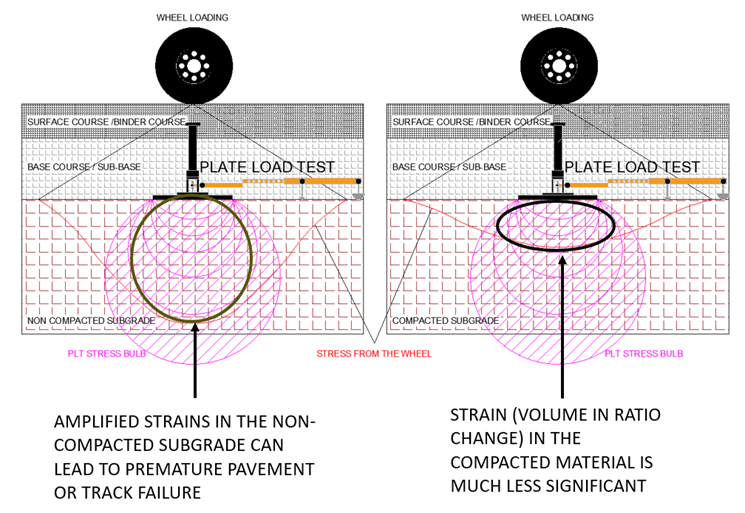
Under ideal compaction conditions, typically, granular soils at a wider variance of OMC at depth, the applied energy from HEIC causes compressive strain. Soil particles rearrange into a denser configuration, void spaces reduce, and both density and stiffness increase.
However, if the soil contains excessive moisture, weak structure, or behaves in an undrained condition, the applied energy may not be able to dissipate through densification.
Instead, the soil may respond through shear deformation and volumetric expansion, resulting in upward and outward displacement of the ground surface. This behaviour is referred to as heave.
From a geotechnical perspective, this occurs when:
- pore water pressures cannot dissipate quickly enough, leading to temporary undrained conditions
- effective stress within the soil does not increase, so the soil cannot gain additional strength under impact
- the soil mass cannot accommodate the applied load through particle rearrangement, which can result in heave or surface uplift
In these cases, the energy introduced by the HEIC drum produces positive vertical strain rather than compressive densification.
This response provides valuable real-time feedback during treatment. Areas where heave occurs often indicate zones of elevated moisture, weaker soil structure, or materials that are not responding favourably to compaction.
Rather than relying solely on laboratory testing or post-construction verification, ICM locates real-time ground behaviour that is often visible to operators and engineers to implement immediate investigations for increased confidence and project continuation without delays.
In this way, heave is not simply a construction phenomenon; it is an important diagnostic indicator of subsurface soil behaviour during impact compaction.
From Spot Testing to 100% Coverage Mapping
Traditional geotechnical testing methods typically involve discrete test locations distributed across a site.
For example, density testing or plate load testing may be conducted at intervals of approximately one test per 2,500 m², depending on the project specifications, geotechnical recommendations, and required level of verification.
While these tests provide valuable engineering data, they represent only a very small number of points across a large construction platform. A 10‑hectare site, for example, could contain only a few dozen verification points when relying solely on conventional testing methods.
From a geotechnical perspective, however, soils rarely behave uniformly across an entire site. Variations in:
- material type
- moisture content
- compaction effort
- construction traffic
- underlying geology
can all create spatial variability in stiffness and strength.
This means that discrete testing methods may confirm that several locations meet specification, while other untreated or weaker zones remain undetected between test points.
Modern HEIC systems address this limitation through Relative Stiffness Mapping using Intelligent Compaction Measurement (ICM) systems.
During operation, each impact of the HEIC drum generates a measurable response from the ground. Sensors on the machine record this response and link it with GPS location data, producing a continuous dataset of ground behaviour across the entire treatment area.
Rather than relying on a small number of discrete tests, engineers can obtain thousands of real-time response measurements across the site as the roller passes over the ground.
The result is a spatial stiffness map that illustrates how the platform responds to impact energy. These maps allow engineers to:
- identify areas where stiffness is increasing with successive passes
- detect zones where response is weaker or inconsistent
- verify that treatment has been applied across the entire working platform
- identify zones of much larger differential settlements
- quantify pass counts over the entire site
In practical terms, this approach moves compaction verification from spot testing to full‑coverage ground response monitoring.
Importantly, stiffness mapping does not replace conventional verification testing. Instead, it provides a high‑resolution view of spatial variability, which can then be correlated with in‑situ tests such as CPT or Plate Load Testing.
By combining continuous response mapping with targeted verification testing, engineers gain both broad spatial coverage and direct performance measurements, providing a far clearer understanding of ground behaviour across the site.
Confirming Ground Performance: CPT and Plate Load Testing
While HEIC and stiffness mapping provide valuable insight into ground behaviour, traditional in‑situ tests remain critical for verification.
Two of the most widely used tests for HEIC are Cone Penetration Testing (CPT) and Plate Load Testing (PLT). Other tests, such as SPTs, DCPs, and Heavy Weight Deflectometers, are also used.
Cone Penetration Testing (CPT)
The Cone Penetration Test is one of the most widely used in‑situ investigation methods in geotechnical engineering and is considered a highly reliable technique for evaluating subsurface soil behaviour.
During a CPT, a cone‑tipped probe is pushed into the ground at a standard penetration rate of approximately 20 ± 5 mm/s (2cm / second), while sensors continuously record soil resistance with depth.
The test produces near‑continuous measurements of several parameters, including:
- Cone tip resistance (qc) – indicating soil strength and stiffness
- Sleeve friction (fs) – helping identify soil type and soil behaviour
Because the probe is advanced continuously, CPT data provides a detailed vertical profile of subsurface conditions rather than discrete test points at depth, such as densities at nominated depths. Interpretation of CPT results allows engineers to estimate continuous engineering parameters, such as:
- relative density in sands
- undrained shear strength in clays
- correlations to soil stiffness and modulus
- SBT’s – Soil Behaviour Types
The reliability of CPT interpretation is particularly strong in sands and clays, where penetration typically occurs under predictable drainage conditions at the standard testing velocity.
Plate Load Testing (PLT)
Plate Load Testing evaluates the load–settlement behaviour of soil under a rigid plate, providing a direct representation of how the ground responds to applied loads.
During the test, a steel plate (typically 300–762 mm in diameter) is placed on the prepared ground surface and loaded incrementally using a hydraulic jack. Settlement is measured using dial gauges or displacement sensors as the applied pressure increases.
From the resulting load–settlement relationship, engineers can derive parameters including:
- bearing capacity of the ground
- modulus of subgrade reaction (k‑value)
- deformation modulus (Ev) often derived from loading cycles
Because PLT directly measures deformation under load, it provides a strong correlation with pavement and foundation performance.
Together, CPT and PLT testing provide valuable confirmation of soil strength, stiffness and deformation characteristics, supporting the interpretation of ground behaviour observed during HEIC treatment.
Aligning Testing With Real Ground Behaviour
The growing use of HEIC and in-situ modulus testing is helping bridge the historical gap between design parameters, construction verification and actual ground performance.
Rather than relying solely on indirect indicators such as density and moisture content, engineers can increasingly measure how the ground responds to load in real time and carries out targeted testing based on the ICM soil stiffness mapping.
This shift toward performance-based ground improvement verification provides a clearer understanding of soil behaviour and helps deliver more reliable outcomes for infrastructure and earthworks projects.
The Takeaway
For decades, earthworks verification has relied primarily on density and moisture testing to demonstrate that compaction requirements have been achieved. These methods remain valuable and continue to play an important role in construction quality control.
However, density alone does not fully represent how the ground will perform under real loading conditions. Infrastructure ultimately depends on how soil responds to stress, deforms under load, and maintains stiffness over time.
This is why parameters such as modulus and deformation behaviour are increasingly important in modern ground engineering.
Methods such as High Energy Impact Compaction (HEIC), combined with tools like Intelligent Compaction Measurement (ICM) and verification tests such as CPT and Plate Load Testing, allow engineers to move beyond simple indicators of compaction and toward a clearer understanding of how the ground behaves.
By integrating:
- traditional density verification
- modulus-based interpretation
- real-time ground response monitoring
- targeted in-situ testing
Engineers can achieve a far more complete picture of platform performance.
As infrastructure demands increase and performance-based specifications become more common, the ability to measure and understand ground stiffness and deformation response will continue to play a central role in ground improvement and earthworks verification.
Ultimately, the shift toward modulus-based thinking is not about replacing traditional testing methods. It is about aligning design intent, construction verification, and actual ground behaviour to deliver more reliable and predictable performance in the field.
Latest news
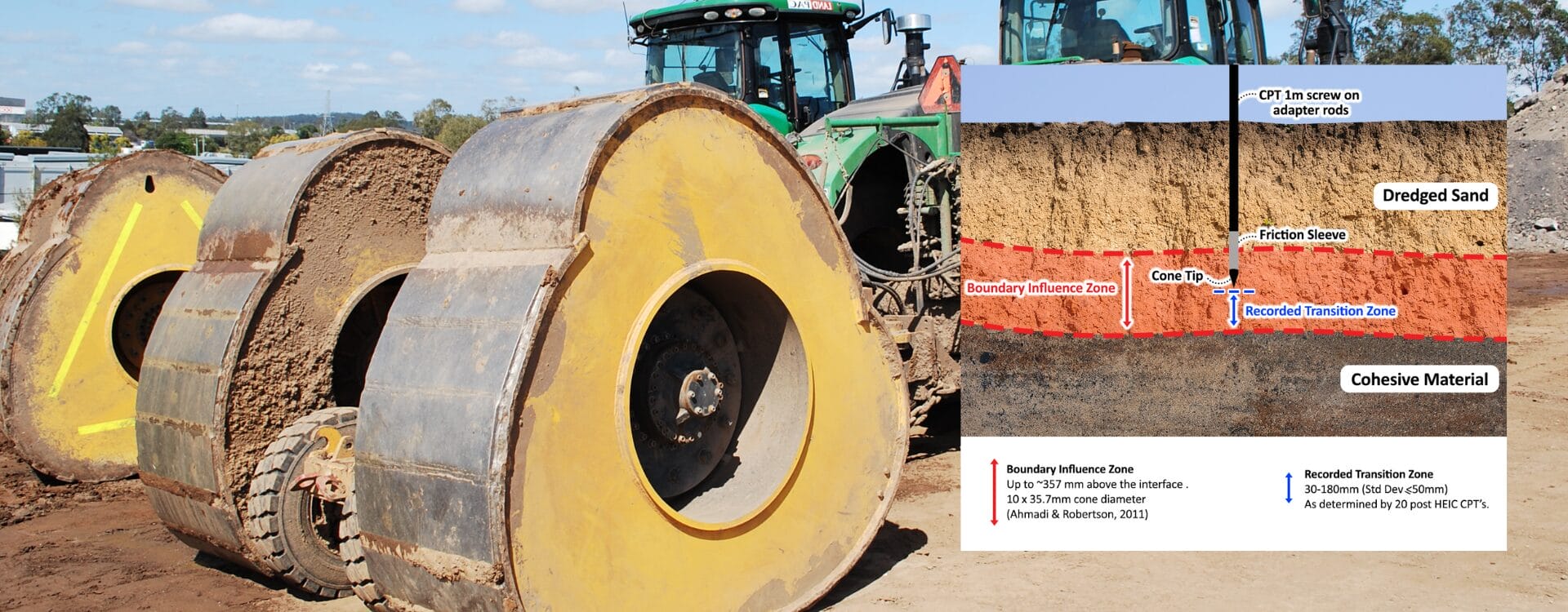
Interpreting qc Response Near Sand-to-Clay Interfaces
Why lower qc values near sand-to-clay interfaces do not always indicate weaker ground conditions.
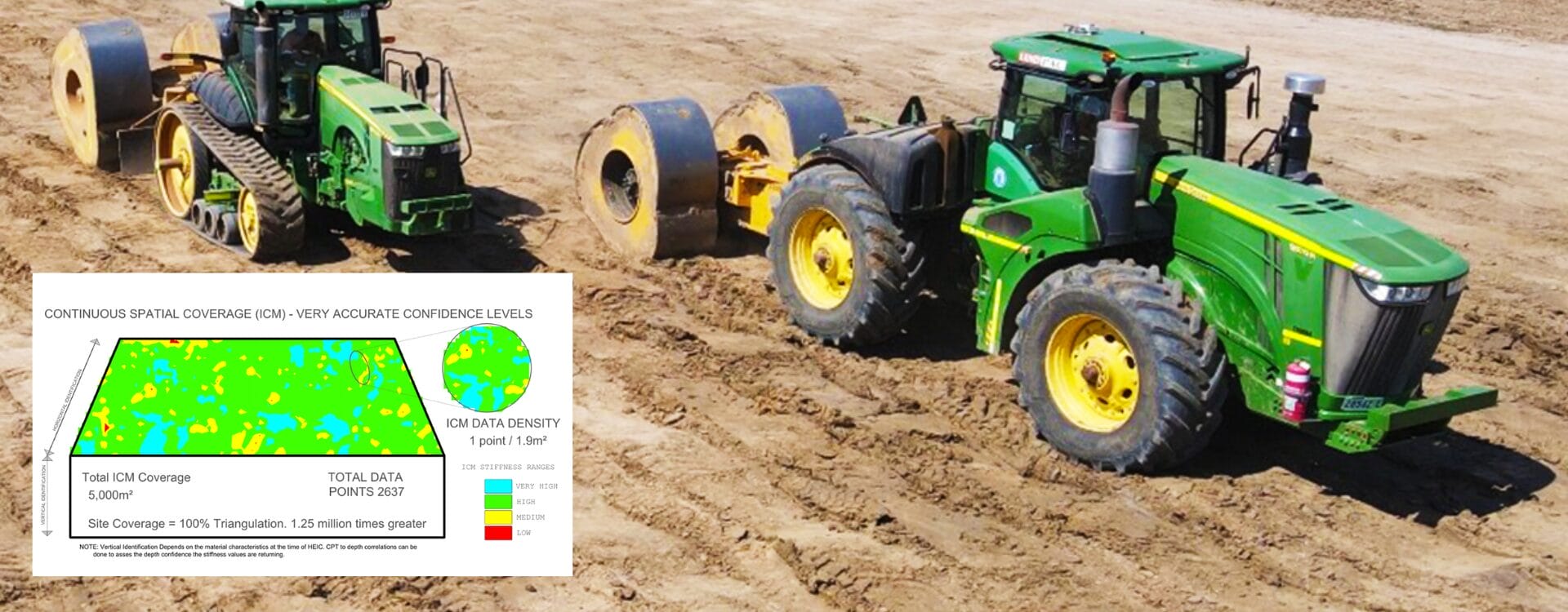
High-Energy Impact Compaction: Calibration, Correlation and Ground Response
HEIC does not measure modulus or bearing capacity directly. It measures how the ground responds to impact. This article explains how calibration and correlation transform that response into meaningful, site-specific engineering insight.
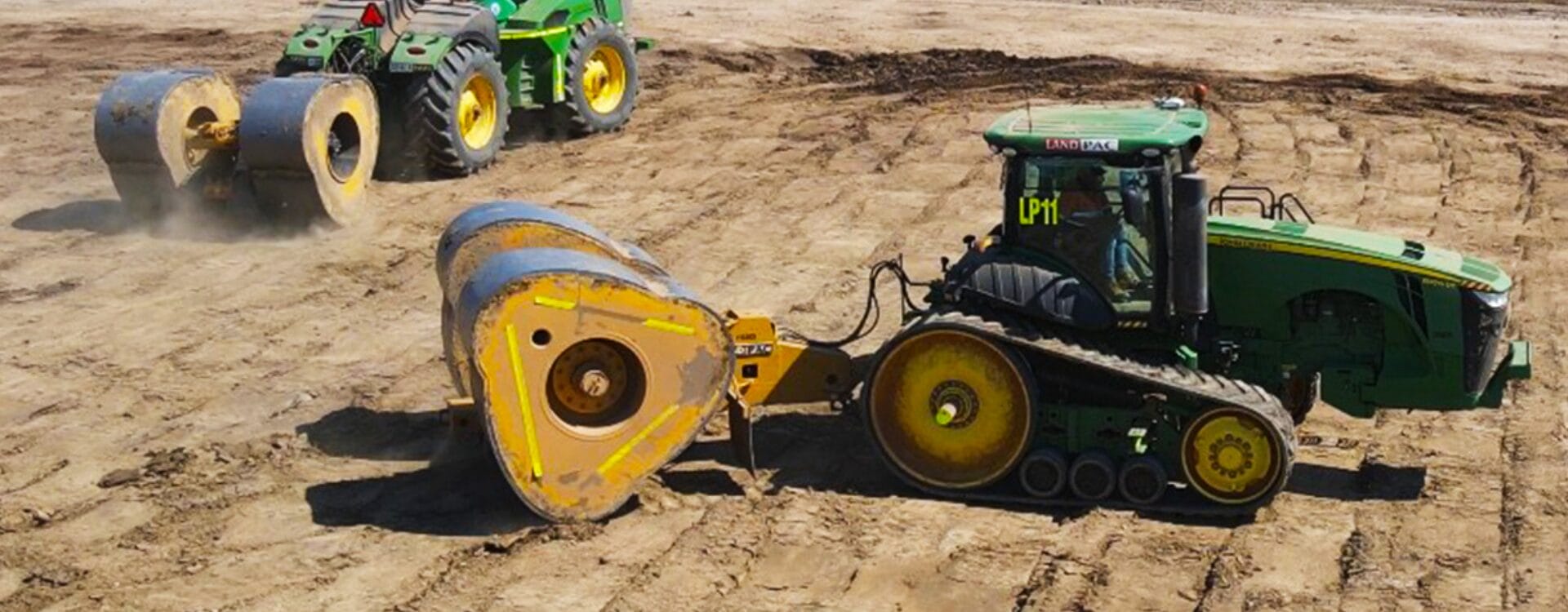
Why Modulus Matters: Moving Beyond Density in Ground Improvement
Density has long guided compaction, but it does not reflect how ground performs under load. This article explores the shift to modulus-based verification using HEIC, ICM and in-situ testing.
