Landpac Presentation

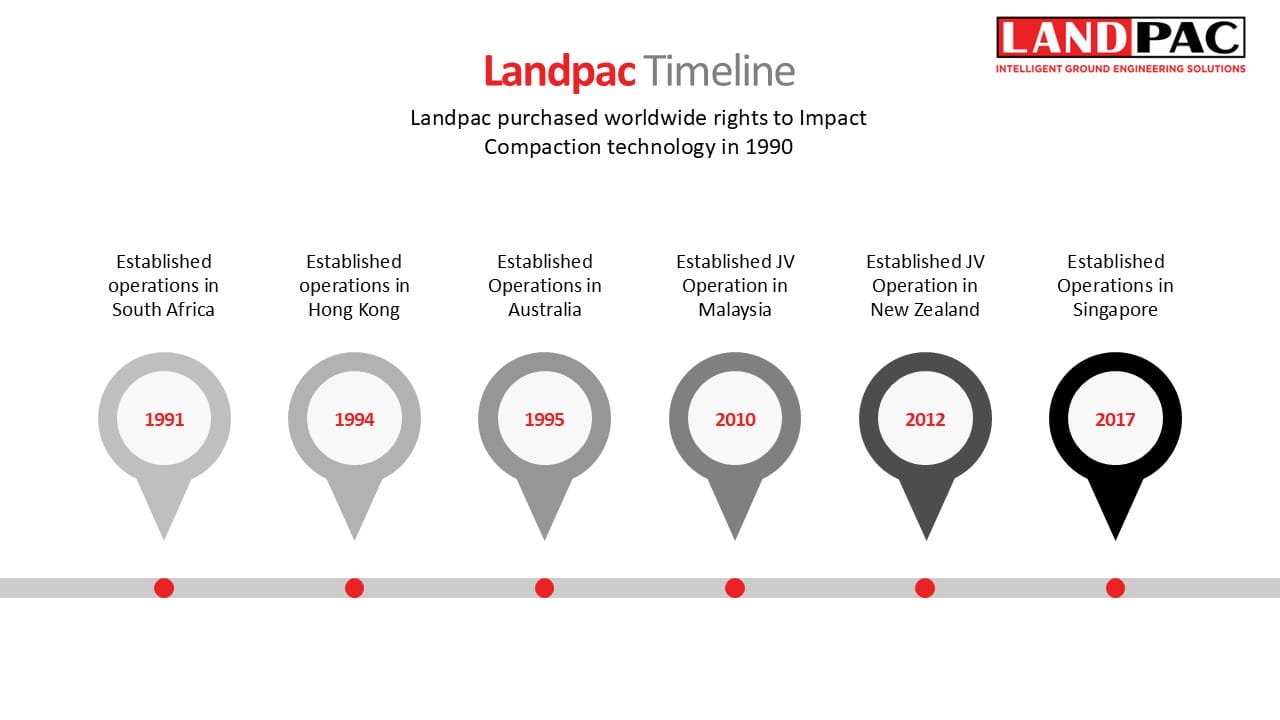
Landpac timeline showing global expansion from 1991 (South Africa) to 2017 (Singapore).
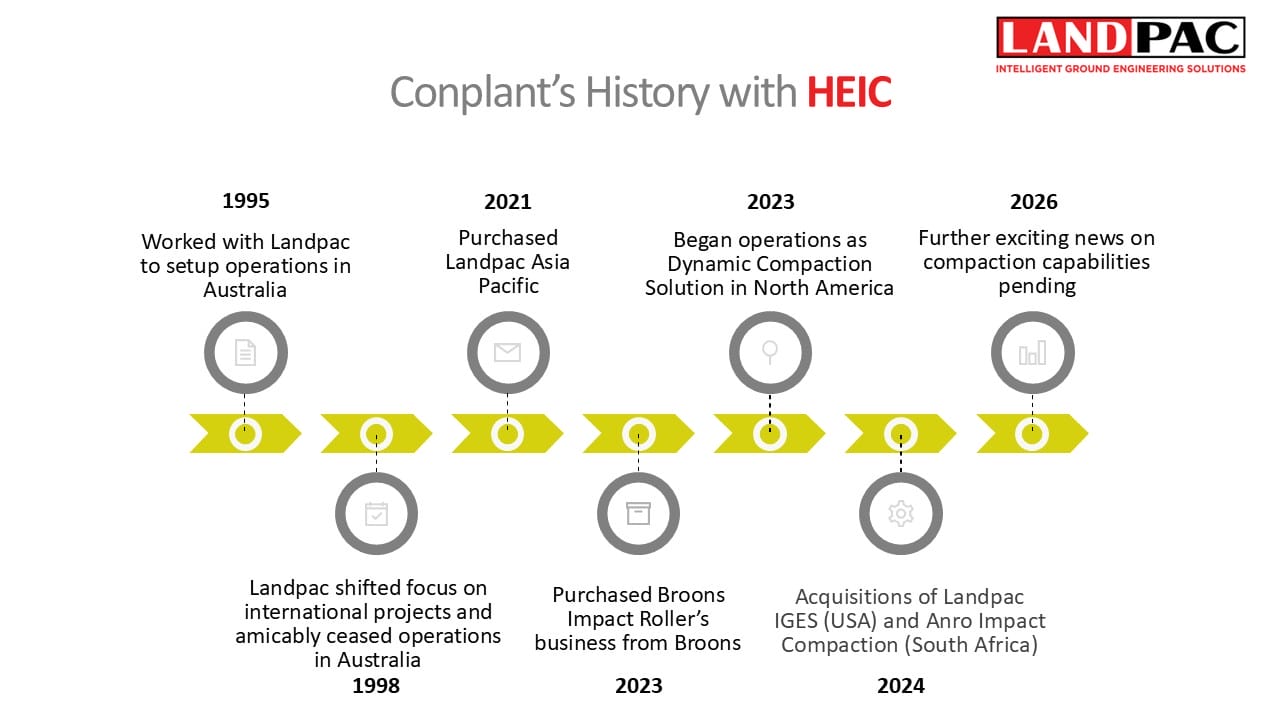
Timeline showing Conplant’s key milestones and partnership with HEIC and Landpac from 1995-2023.
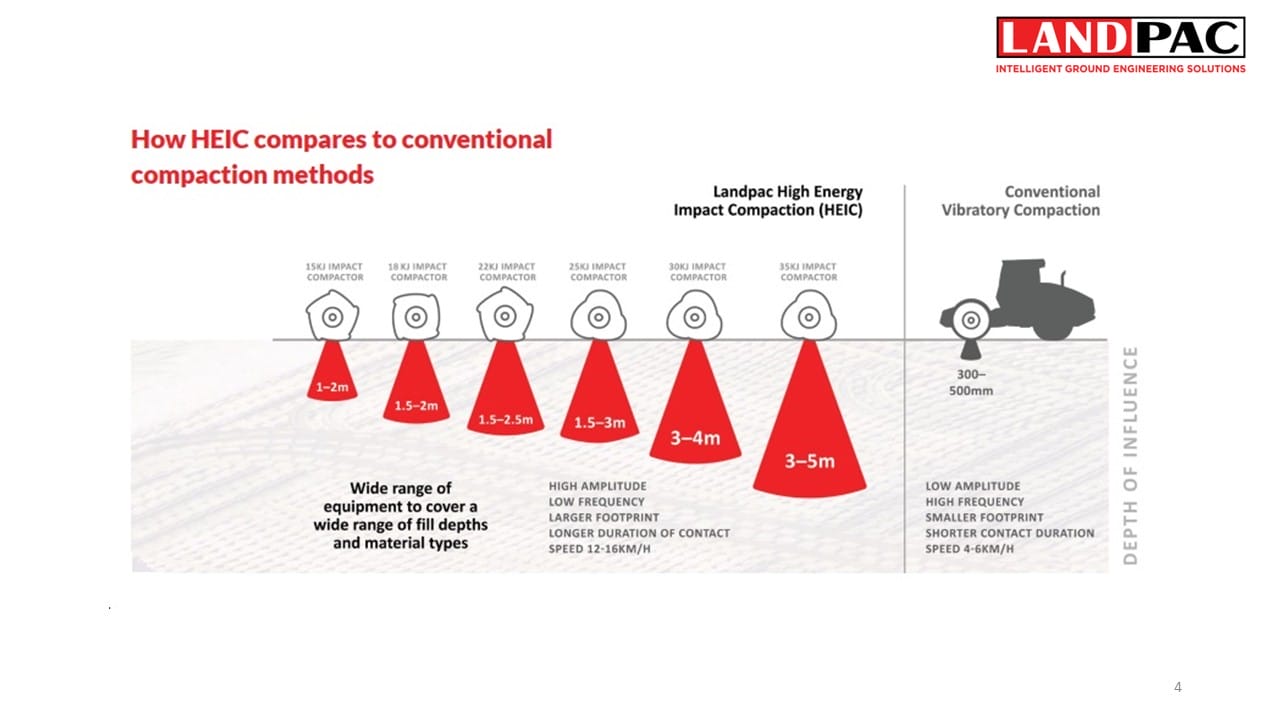
Diagram comparing compaction depths between HEIC and conventional vibratory compaction methods.
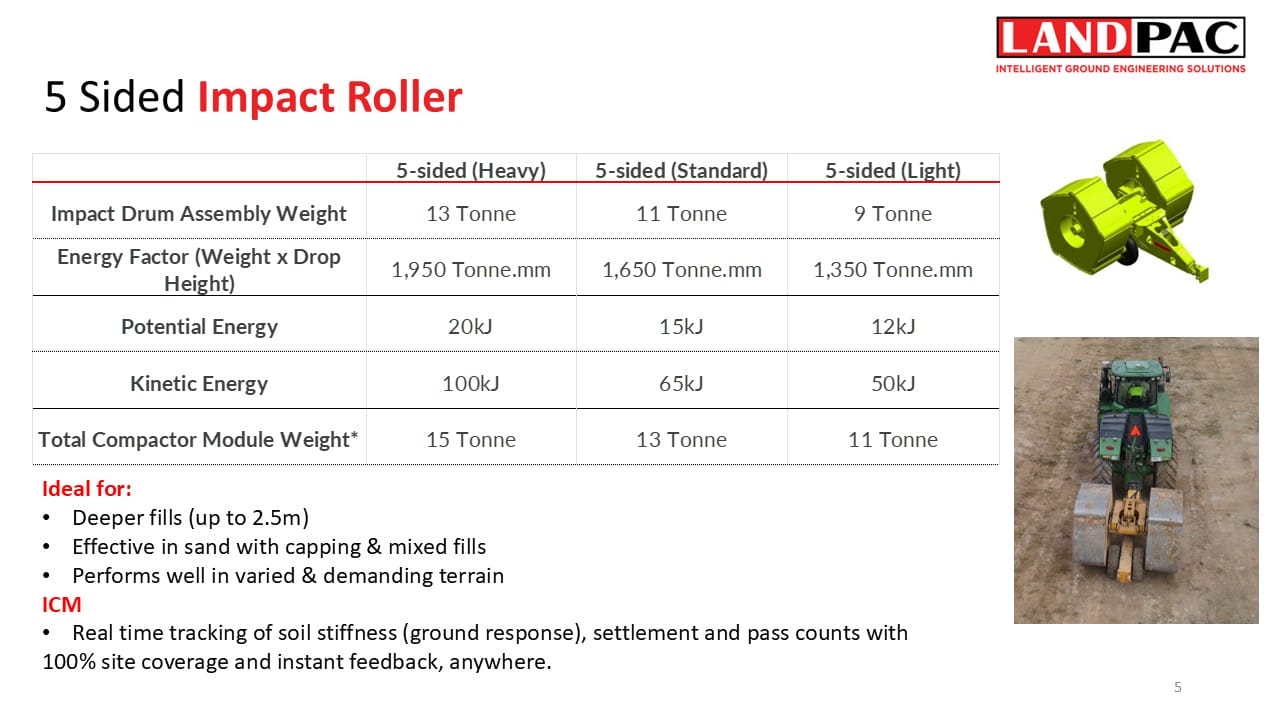
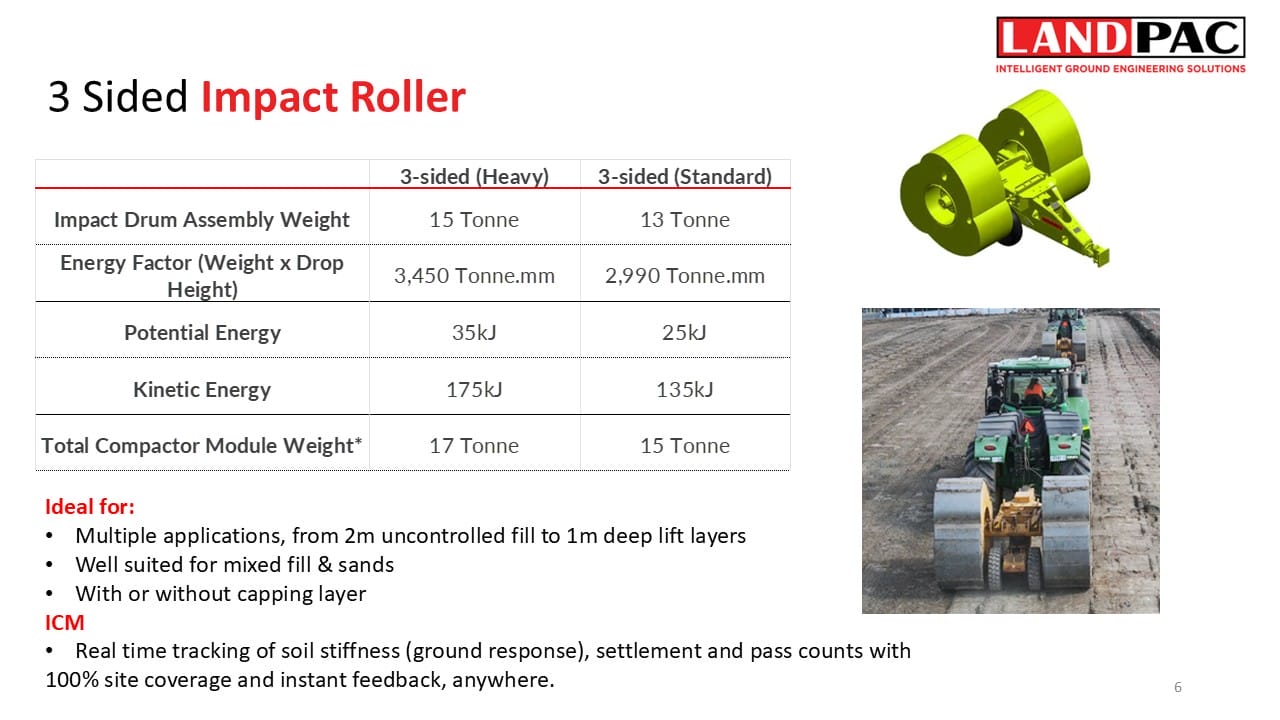
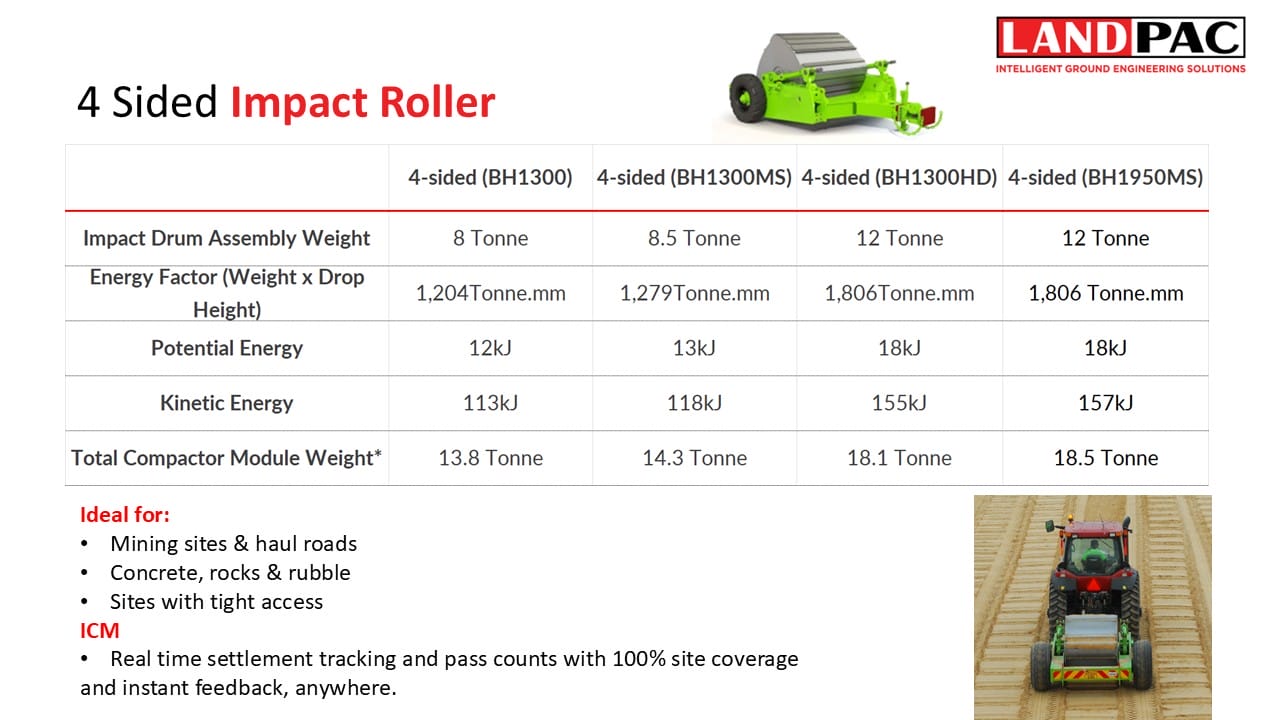
Table comparing specs of 5-sided impact rollers; small green roller machine at construction site.
A green tractor pulls a large yellow compactor on a construction site with workers nearby.
Green impact roller with specs table; ideal for roads, rubble, large sites, and faster compaction.
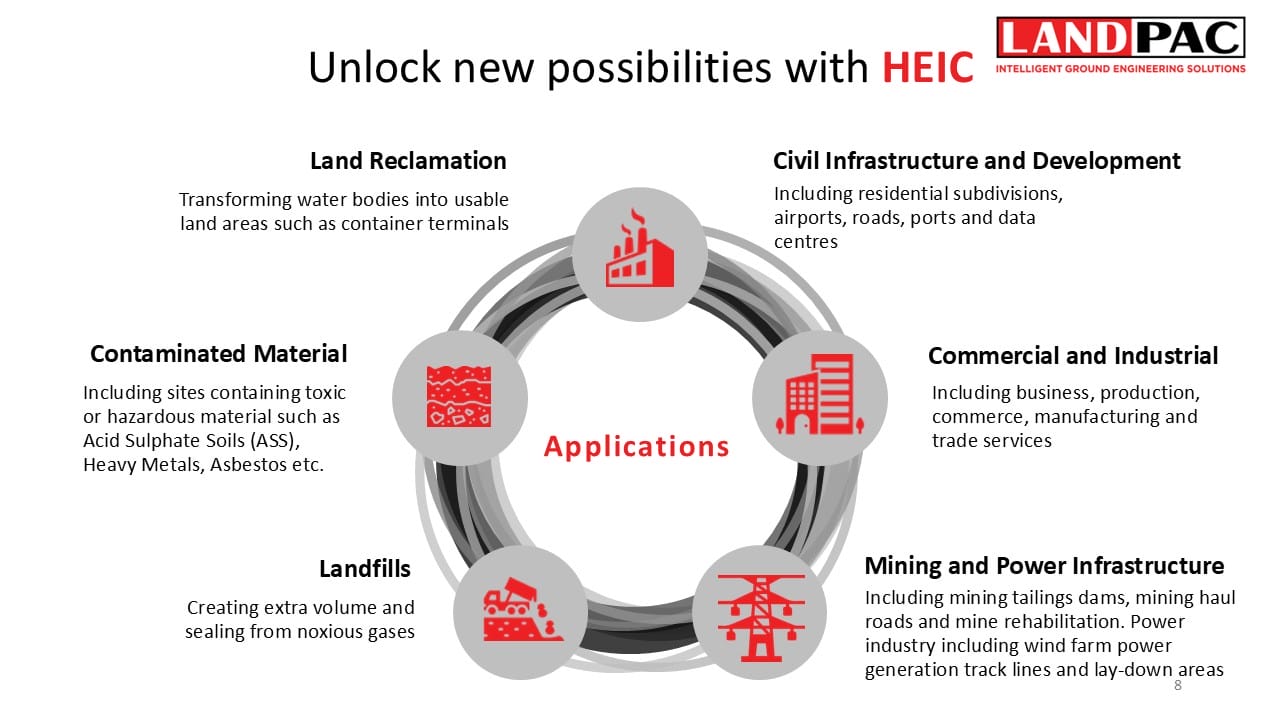
HEIC applies to land reclamation, infrastructure, landfills, mining, commerce, contamination.
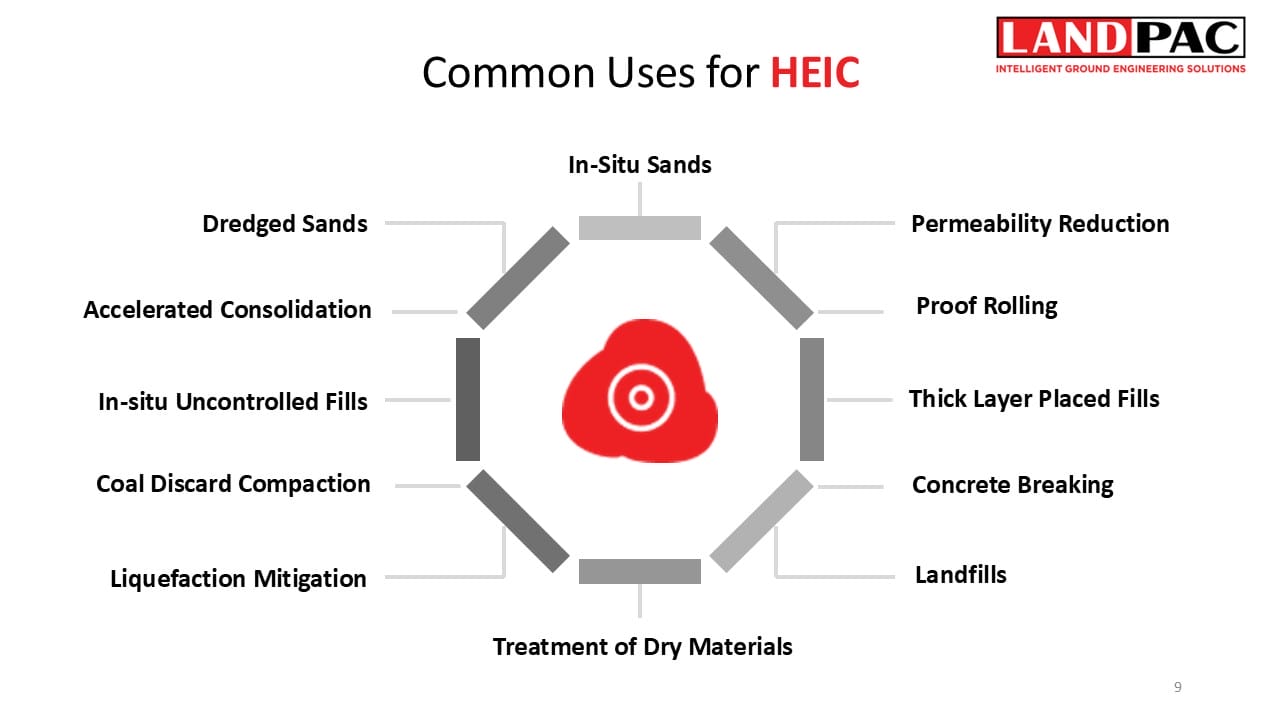
Diagram showing common uses for HEIC, such as sands, fills, compaction, and landfills.
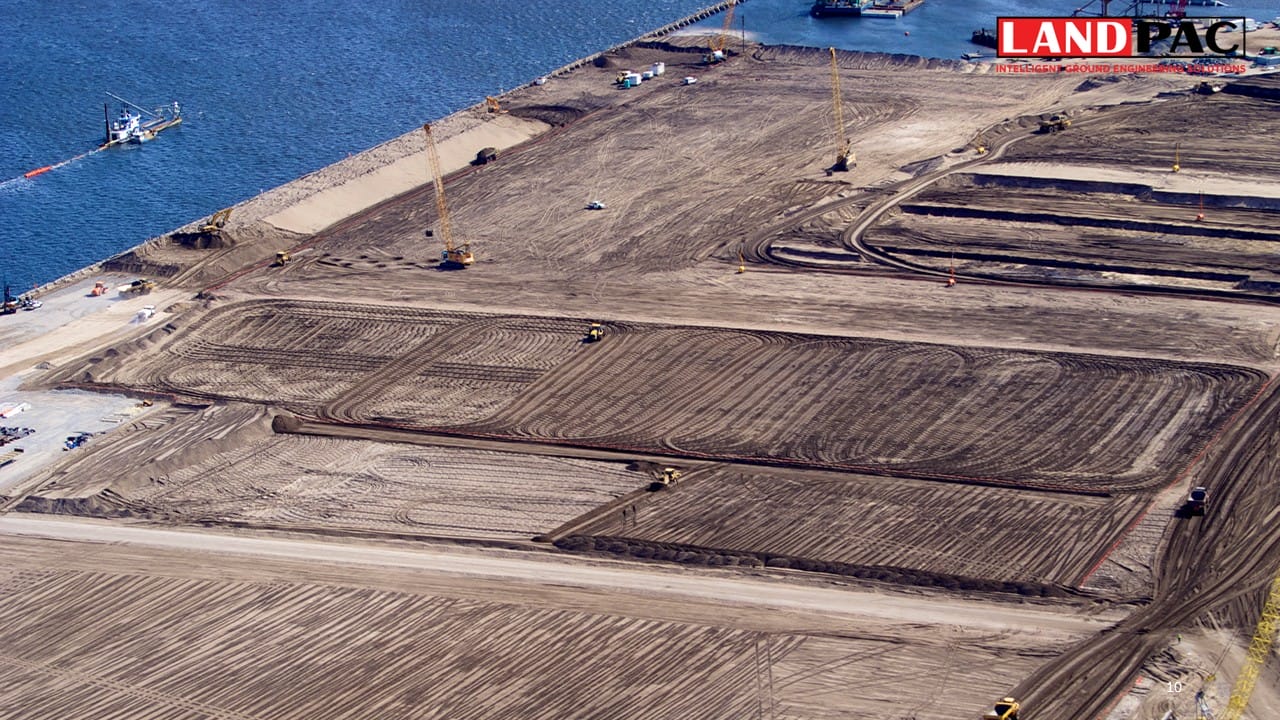
Aerial view of large-scale land grading near water, with equipment and cranes at work.
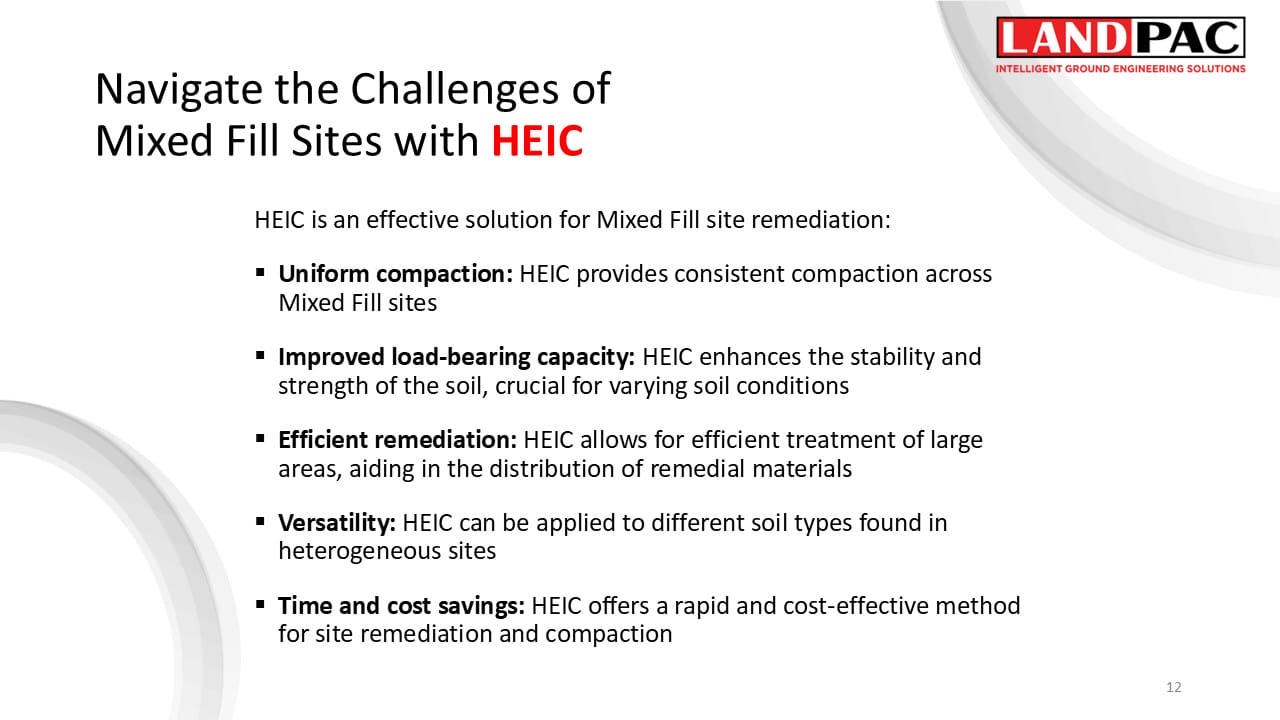
HEIC improves compaction, stability, speeds large site treatment, fits all soils, and saves costs.
Bulldozers compact soil in a large, open construction site with layered earth visible.
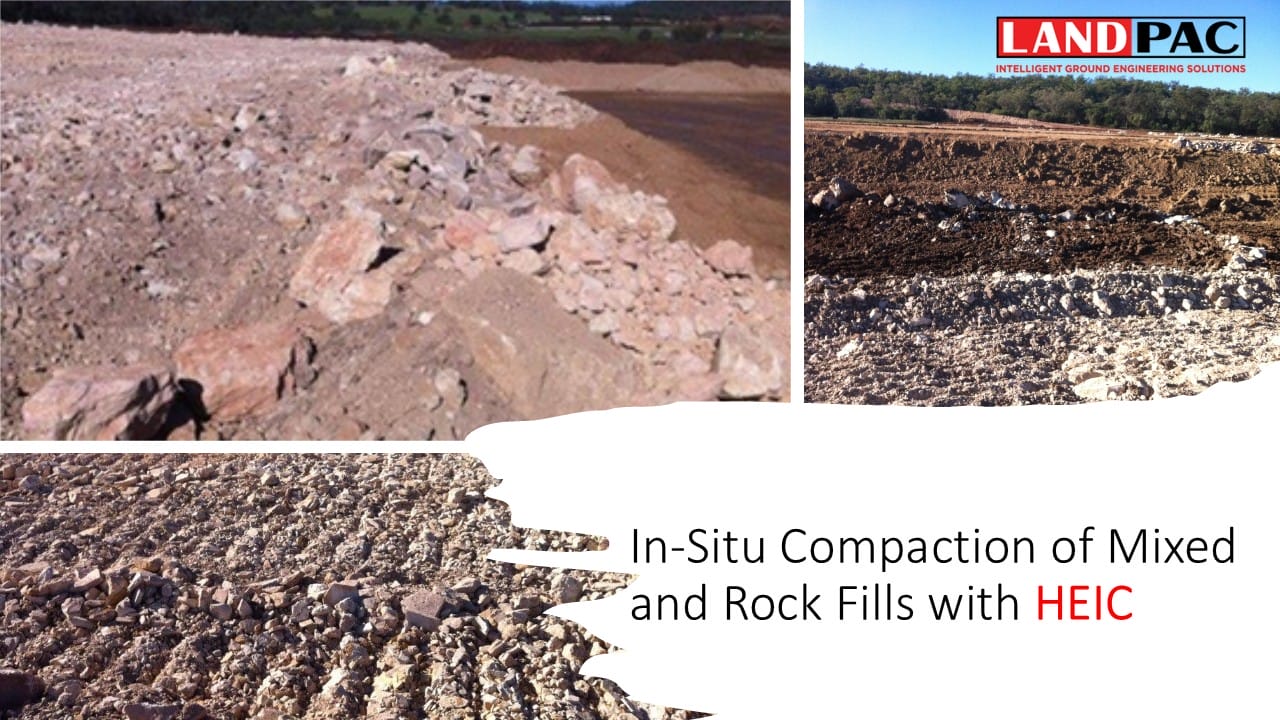
Rock and mixed fill compaction on-site, with LANDPAC logo and project description visible.
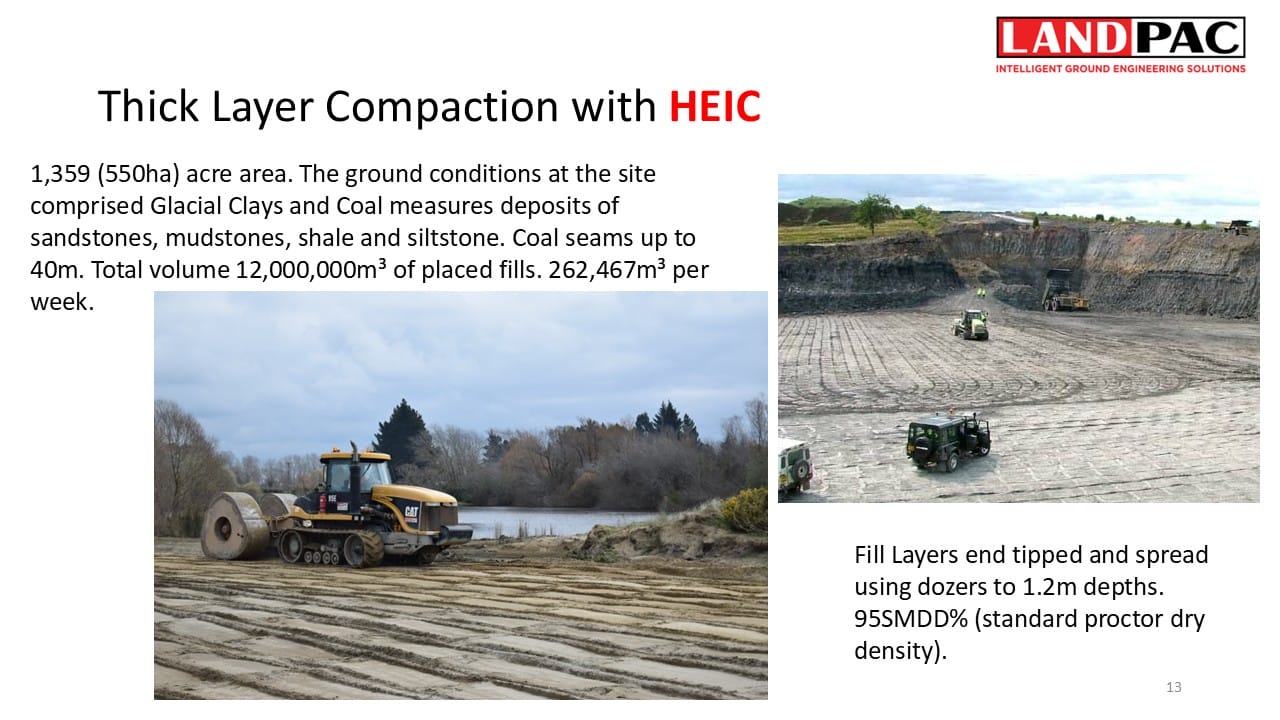
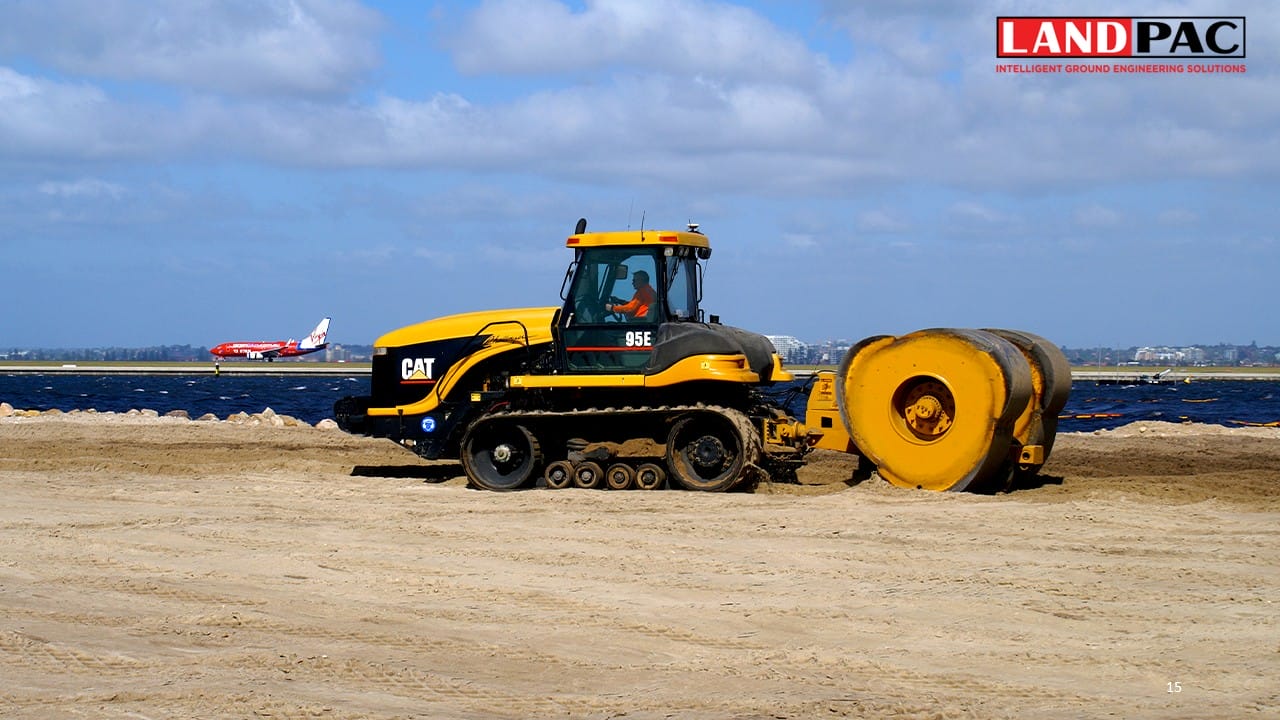
Yellow CAT track loader with roller on sandy site, plane in background, LANDPAC logo at top right.
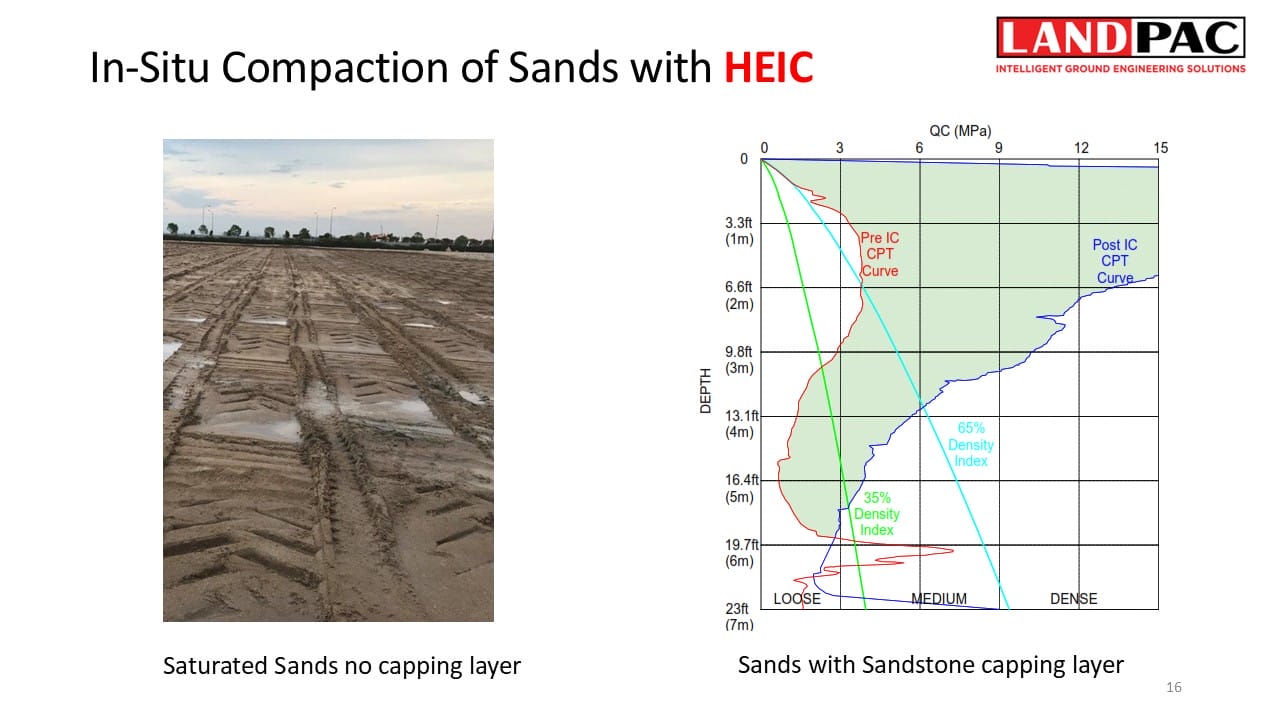
Field with tire tracks left, sand compaction chart right, LANDPAC logo top right corner.
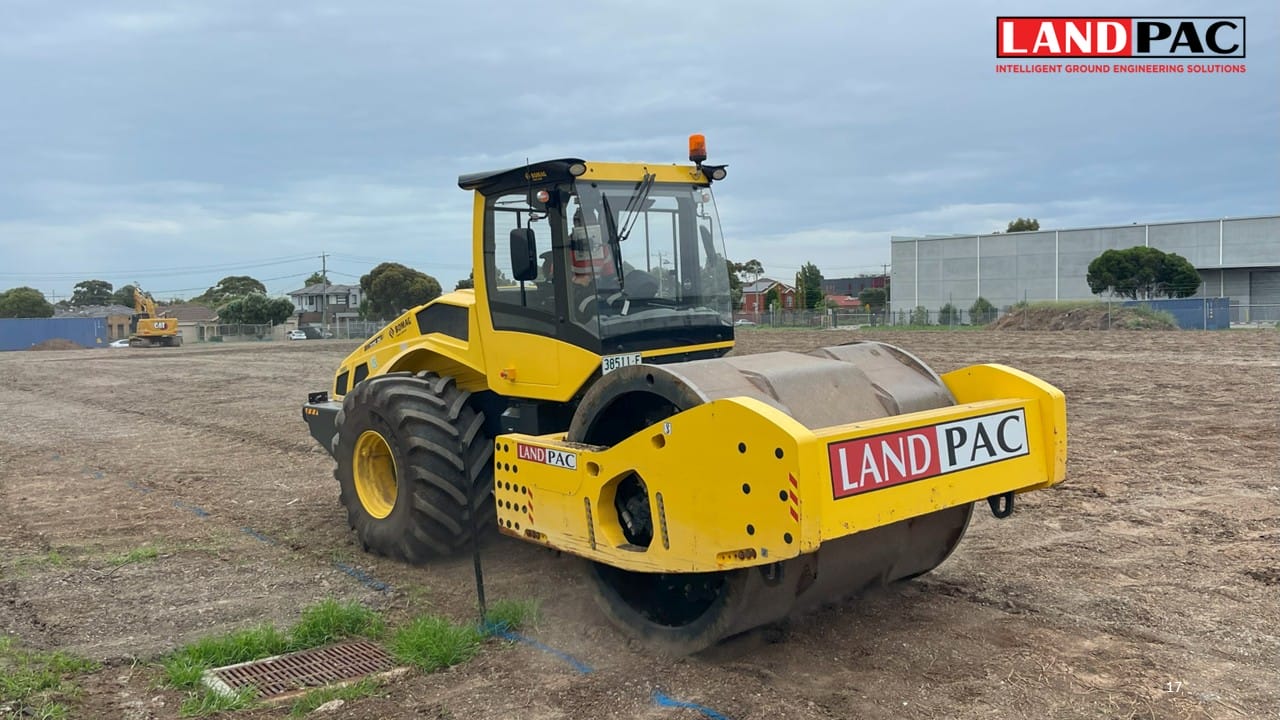
A yellow road roller with “LANDPAC” branding on a construction site.
A bulldozer works at a large, open construction or landfill site under a partly cloudy sky.
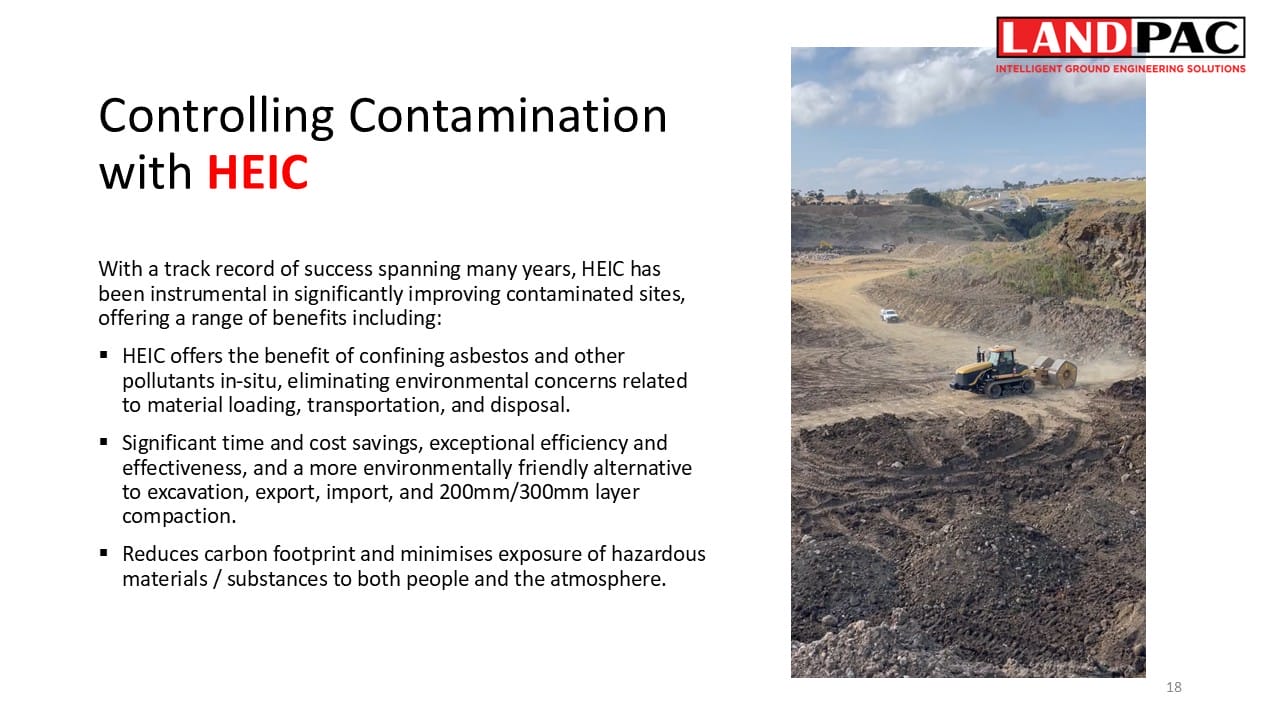
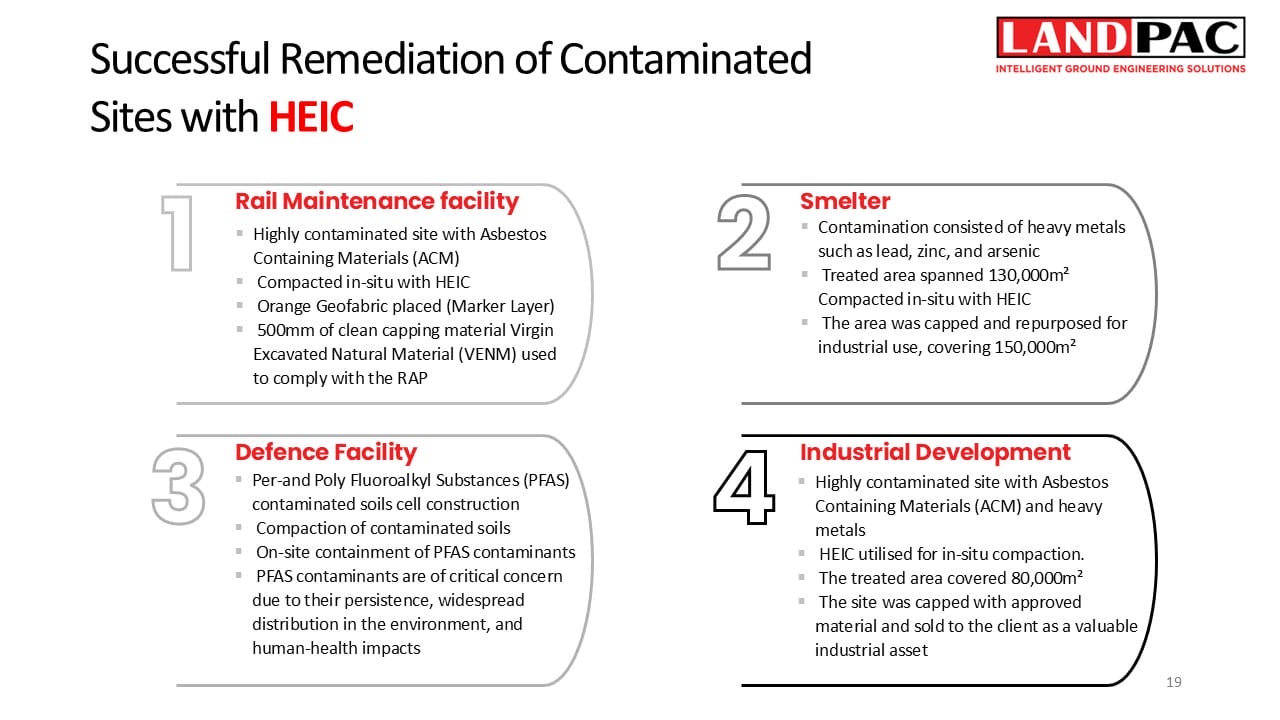
Infographic with four project summaries about contaminated site remediation for LANDPAC with HEIC.
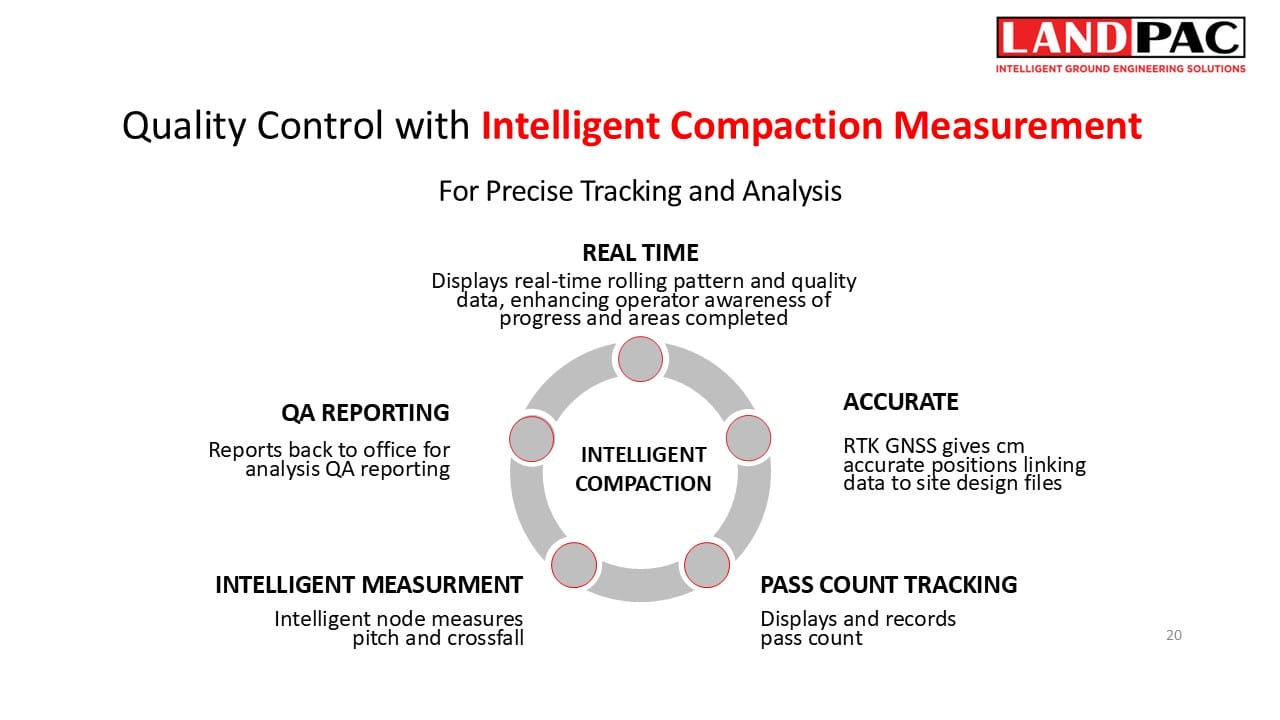
Real-time, accurate compaction with QA, pass tracking, and smart measurement data.
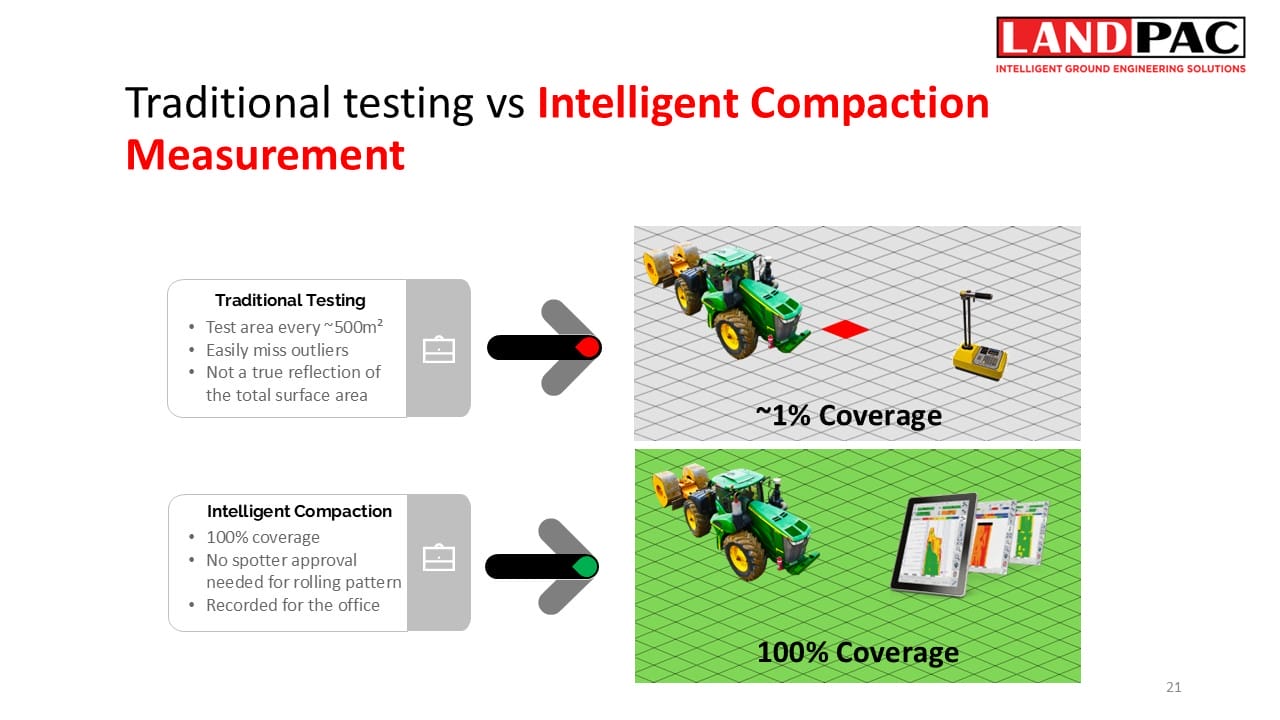
Top: tractor testing ground, 1% coverage. Bottom: tractors with tablets, 100% coverage.
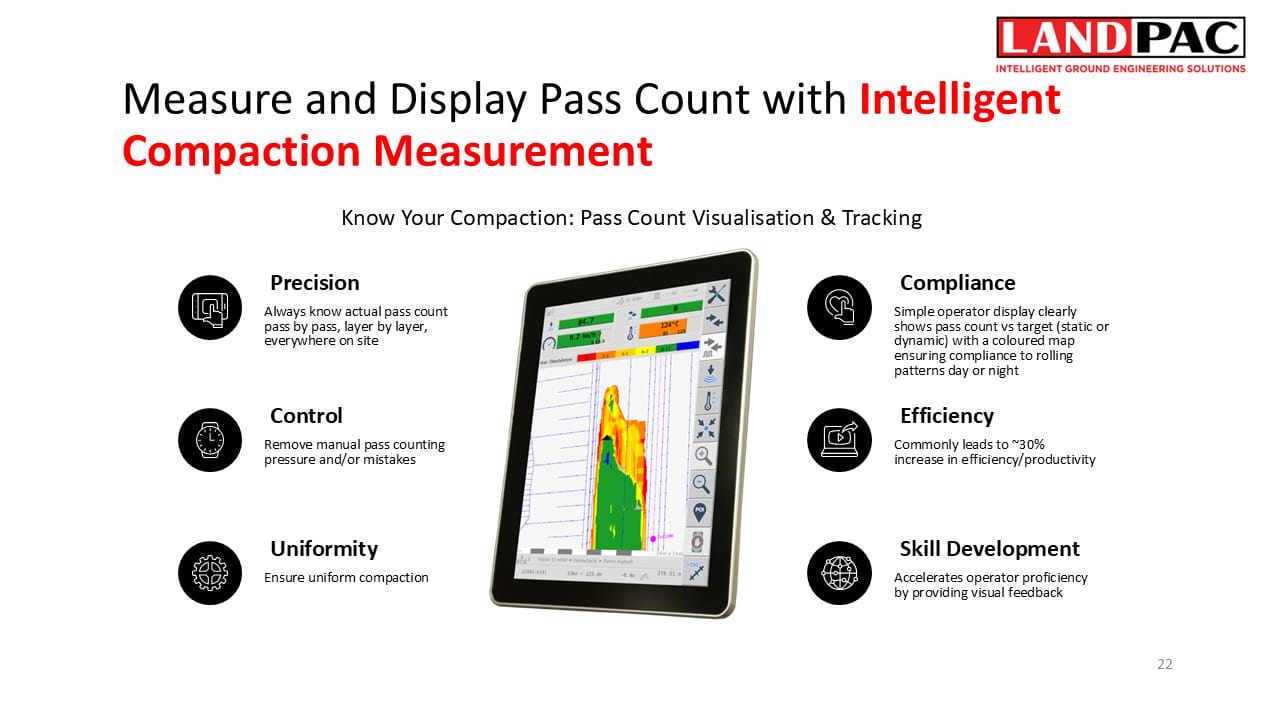
Tablet displaying compaction data, surrounded by icons and text about pass count monitoring.
LANDPAC logo and heading: “Quality Control with Intelligent Compaction Measurement”.
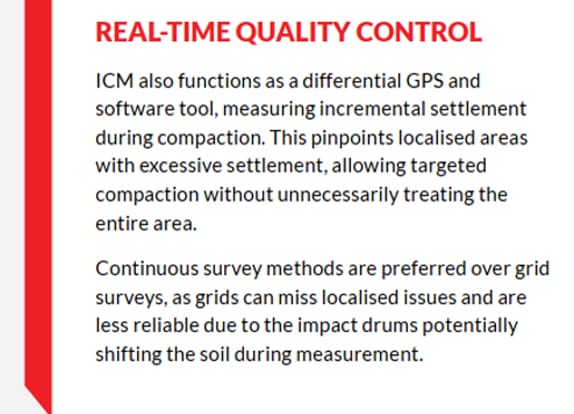
Text about real-time quality control in soil compaction, highlighting benefits of continuous survey.
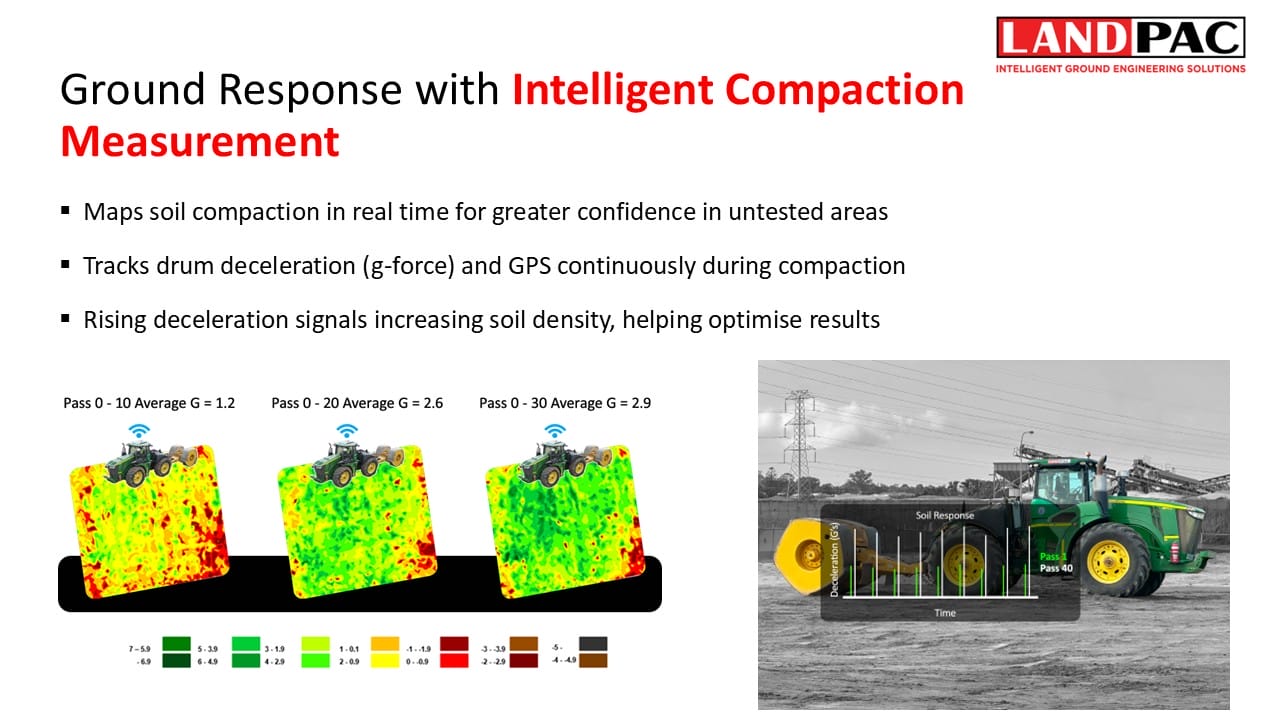
A tractor compacts soil, with color-mapped data charts and measurement indicators shown.
Bulldozer on dirt next to a color-coded compaction measurement map and LANDPAC logos.
LANDPAC logo and text: Intelligent Compaction Measurement Mobile Application.
LANDPAC logo and text: Intelligent Compaction Measurement Pass Count & Tracking.
Presentation slide on in-situ testing with Landpac, listing recommended geotechnical tests.
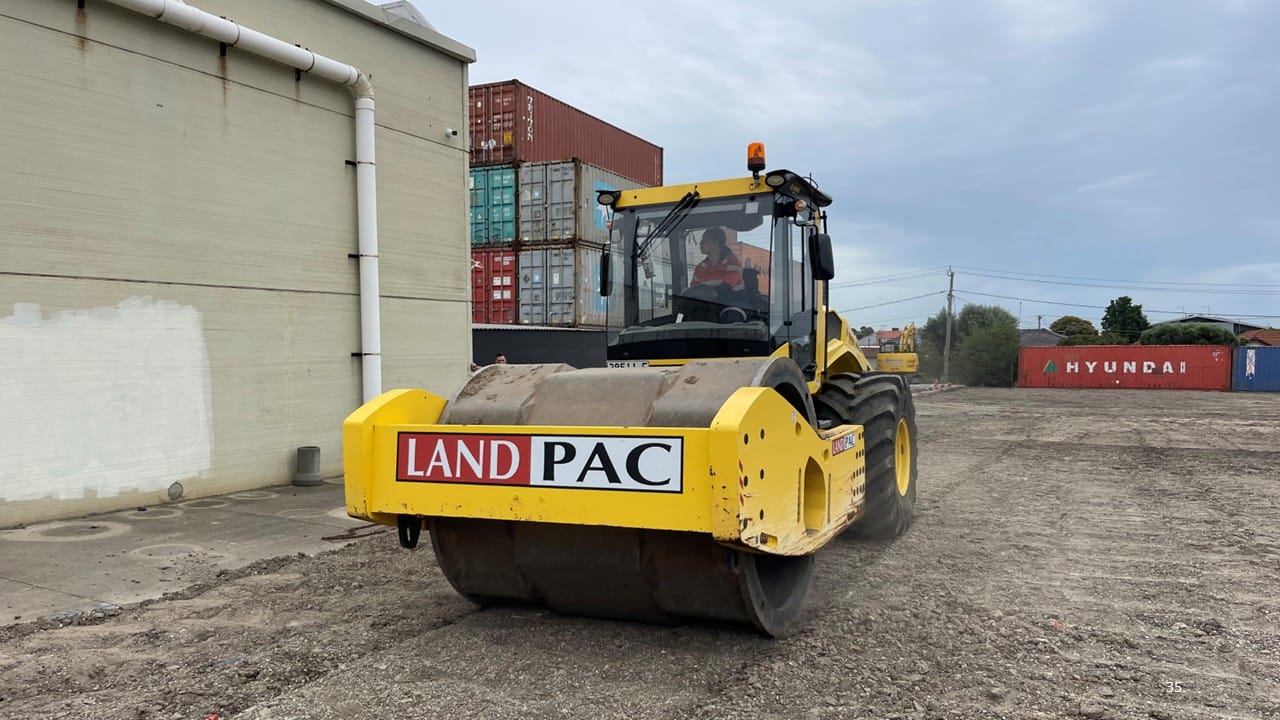
Yellow road roller labeled “LAND PAC” on gravel near stacked shipping containers.
Two QR codes with Landpac and Broons logos for case studies and technical papers.

Frequently Asked Questions

Landpac specialises in providing and implementing ground improvement solutions on compressible unstable sub-grades with the use of Impact Compaction. Over the 25 years since our inception, Landpac Australia has delivered ground improvement solutions and provided impact compaction services throughout Australia and the Asia-Pacific region. 

When planning your project, it is best to consult with the team at Landpac prior to submitting your tender. That way, cost savings can be factored into your budget for the project.

While we’re based in Australia and Singapore, we operate across the Asia-Pacific region.

Over the 25 years since our inception, Landpac Australia has delivered ground improvement solutions and provided impact compaction services throughout Australia and the Asia-Pacific region. The Landpac group has operations in Australia, Singapore, United Kingdom, South Africa, Asia and the Middle East. 

Check out some of our projects here.

High Energy Impact Compaction (HEIC) is a compaction technique that transmits rapid, high-energy impact in order to strengthen base materials and lay firm foundations for development.

HEIC can be far more efficient than conventional compaction methods – around a fraction of the cost, and significantly quicker than traditional methods. Our specialists can advise if HEIC is the right solution for your site.

High-energy impact compaction offers more efficient compaction for specific soil types, especially in larger construction projects. Regular compaction methods, while generally slower, are more versatile and can be used for a wider variety of soil types and situations. The choice between the two methods depends on project-specific factors and goals.

Impact compaction might be necessary for your site if you:

    • Have loose, granular soil with poor compaction properties
    • Need to enhance load-bearing capacity for structures
    • Want to mitigate settlement issue
    • Find it more cost-effective compared to other methods


Consulting a geotechnical engineer is crucial to make an informed decision based on soil tests, site conditions, and project requirements.

Landpac trades as Landpac Technologies Pty Ltd and is a wholly owned subsidiary of Conplant.

Unsure If HEIC is Right for Your Next Project?